|
|||||||||||||||||||||||||||||||||||||||||||
|
“Gradually June has leveled off into the somnolence and quietude of summer . . .
Already the fresh look of spring is gone . . . Heat covers us like a stuffy blanket that we cannot escape. Even the birds are quieting down.”  -- from Appalachian Spring by Marcia Bonta -- from Appalachian Spring by Marcia Bonta |
|||||||||||||||||||||||||||||||||||||||||||
|
 high clouds: calm: 72ºF high clouds: calm: 72ºFTall lilies never seem to get their due, and I’m not sure why. They have perfect timing. They bloom after the irises are finished and before the daylily's high season begins. They are majestic and they smell good too. It may that many of the lilies are just too stately and magnificent. They flower on such tall stalks that visitors of average height have to look up to see them– a humbling experience for people used to dealing with more deferential flowers. Then too, the keepers of this garden don’t seem as obsessive about the placement and care of tall lilies as they do about spring bulbs, irises, roses, and daylilies. The lilies are scattered here and there throughout the expansive bulb gardens which dilutes their impact. I’ve noticed too that many of the best lily specimens have been planted deep inside the bulb beds which keeps all but those tending the plants from getting an up-close look. Finally, some of the lilies are not getting the care they need. To keep them from falling over, their stalks need to be tethered to a bamboo pole. Sadly, too many of the tall stalks laden with blooms have toppled because they had not been staked. 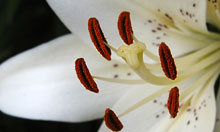 Just after a flower on a tall lily opens, before the bees find them or before they are buffeted by wind, they come as close to perfection as a flower can be. I found such a bloom this morning. The six dangling anthers were laden with chili-colored pollen just ready to drop on the petals. Except for some tiny smudges of pollen, the three-lobed stigma was still creamy and clear. Best of all, the flower was hanging over a walkway so that I could have a look at the kind of lily that only those who grow them have a chance to see. Just after a flower on a tall lily opens, before the bees find them or before they are buffeted by wind, they come as close to perfection as a flower can be. I found such a bloom this morning. The six dangling anthers were laden with chili-colored pollen just ready to drop on the petals. Except for some tiny smudges of pollen, the three-lobed stigma was still creamy and clear. Best of all, the flower was hanging over a walkway so that I could have a look at the kind of lily that only those who grow them have a chance to see.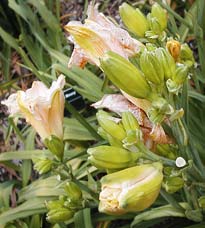 Plenty of buds on a daylily stock means more flowers over more days. Fat buds mean bigger flowers. Both are sought-after features by hybridizers. After seeing such a flower this morning though I have my doubts about when more of both becomes too much. The daylily I saw was packed with fat buds tightly crammed together cheek-to-jowl. Spent blooms were rotting among the yet-to-flower ones. I wondered what the plant would look like should two or three flowers bloom at the same time. Would they have enough space to open fully and be seen as individual flowers? This variety is an example of good intentions gone bad. In the race to more and bigger, beauty and aesthetics have been lost. Plenty of buds on a daylily stock means more flowers over more days. Fat buds mean bigger flowers. Both are sought-after features by hybridizers. After seeing such a flower this morning though I have my doubts about when more of both becomes too much. The daylily I saw was packed with fat buds tightly crammed together cheek-to-jowl. Spent blooms were rotting among the yet-to-flower ones. I wondered what the plant would look like should two or three flowers bloom at the same time. Would they have enough space to open fully and be seen as individual flowers? This variety is an example of good intentions gone bad. In the race to more and bigger, beauty and aesthetics have been lost.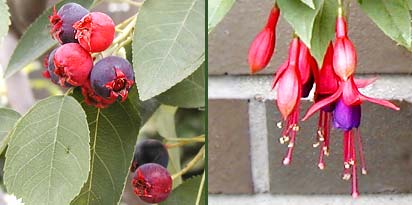 We walk the garden first; then we have a cup of coffee in the café and watch others walking. We watched as a group of Red Hat Society women wearing their trade-mark outfits of red hats with clashing purple dresses walked into the garden. I was not fast enough to get picture of the group before they disappeared into the Linnaean glasshouse. I wish I had. It would have made complementary third to the two other pictures of purple and red plant combinations that I took this morning: a fuchsia in hanging baskets and the ripening berries of a serviceberry tree.  Last week I wrote that the Japanese garden that is a part of this botanical garden lacks moss – a landscape and symbolic feature of many Japanese Gardens. I was wrong. The garden has an extensive, established field of moss. It carpets about half of the ground under the flowering plum trees that surround the Arbor of the Plum Wind. The other half is bare ground. This too I would bet is slated to become a moss field. I wonder if the moss will first appear as light peach fuzz covering the ground. Or will the space be a checkerboard of ‘moss plugs’ like a hair transplant? Perhaps rolls of ‘moss sod’? I’ll be watching. Last week I wrote that the Japanese garden that is a part of this botanical garden lacks moss – a landscape and symbolic feature of many Japanese Gardens. I was wrong. The garden has an extensive, established field of moss. It carpets about half of the ground under the flowering plum trees that surround the Arbor of the Plum Wind. The other half is bare ground. This too I would bet is slated to become a moss field. I wonder if the moss will first appear as light peach fuzz covering the ground. Or will the space be a checkerboard of ‘moss plugs’ like a hair transplant? Perhaps rolls of ‘moss sod’? I’ll be watching. clear: easy breeze: 78ºF clear: easy breeze: 78ºF
Many of this botanical garden’s most spectacular sights are short-lived. Peonies, Japanese cherry trees, irises, lilies, lilacs, and the succession of spring bulbs from snowdrops though tulips are all brief displays, easily missed by visitors whose calendars are not those of the plants. If only plants could send out e-mails letting us know when they are in their prime. 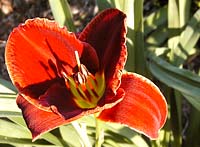 The annual display of daylilies is a week—maybe two—away. A few of the smaller varieties have already begun to bloom, but most of the big, full-budded ones with astonishing colors and markings are just now hoisting their stalks. With so few daylilies in bloom, I took time to look more closely at those that had opened. ‘Watermelon Slice’ made me walk through the wet grass to get a closer look. Just one flower had opened. True to its name it was a generous-sized watermelon-red bloom with petals that glistened with a velvet sheen. The petals of ‘Watermelon’ were ruffled like a pinched pie crust and they were edged in a pencil-thin cream. An internet site that sells ‘Slices’ says that the edge color will widen and turn to rose when the weather gets hotter. The annual display of daylilies is a week—maybe two—away. A few of the smaller varieties have already begun to bloom, but most of the big, full-budded ones with astonishing colors and markings are just now hoisting their stalks. With so few daylilies in bloom, I took time to look more closely at those that had opened. ‘Watermelon Slice’ made me walk through the wet grass to get a closer look. Just one flower had opened. True to its name it was a generous-sized watermelon-red bloom with petals that glistened with a velvet sheen. The petals of ‘Watermelon’ were ruffled like a pinched pie crust and they were edged in a pencil-thin cream. An internet site that sells ‘Slices’ says that the edge color will widen and turn to rose when the weather gets hotter.I didn’t noticed how many fans ‘Slices’ had, but if it had more than three it will be dug and the excess fans will be offered for sale in August. I have no room for more daylilies, but if I see it offered for sale I know I’ll be tempted. 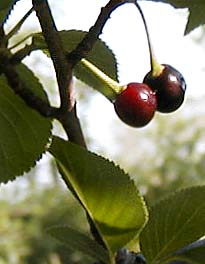 The Japanese Cherry trees produce cherries, though not many of them. As I walked by the grove of Japanese Cherry trees, I saw clusters of two and three black cherries hanging beneath the leaves. I wondered why these trees that look like a cones of cotton candy floss when they are in bloom produce so little fruit. Each cherry was about the size of a small hazelnut. The fruit is supposed to be edible, but, since this a botanical garden, I didn’t do a taste test. (As all our mothers and grade school principals used to say: “What if everyone did that?”) So, whether sweet, sour, large pit or small, tough skin or soft, I’ll never know unless I can taste a sample from another tree outside this protected greenzoo. The Japanese Cherry trees produce cherries, though not many of them. As I walked by the grove of Japanese Cherry trees, I saw clusters of two and three black cherries hanging beneath the leaves. I wondered why these trees that look like a cones of cotton candy floss when they are in bloom produce so little fruit. Each cherry was about the size of a small hazelnut. The fruit is supposed to be edible, but, since this a botanical garden, I didn’t do a taste test. (As all our mothers and grade school principals used to say: “What if everyone did that?”) So, whether sweet, sour, large pit or small, tough skin or soft, I’ll never know unless I can taste a sample from another tree outside this protected greenzoo.I was looking at the pictures in a book of the gardens of Kyoto, Japan that a friend who recently visited some of the gardens there sent me. Although I’ve never been to Kyoto, the elements in the gardens were familiar. Most of pictures echoed features that I see in Japanese Garden that is part of this botanical garden: white pebbles raked to look like waves, rocks meant as stand-ins for mountains or islands, and the soft curves of azalea mounds.  Moss is the one element of the Kyoto gardens missing from the Japanese Garden in the botanical garden that I visit. Pictures in the Kyoto book show “mossy carpets,” “the luminosity of moss in the rainy season,” and a “circular mound of moss symbolizing longevity.” The only place I could remember seeing as an impressive expanse of moss was on the roof of the restroom building –not a spot that lends itself to majestic symbolism. This morning even that stand of moss was gone. Roofers had removed the moss-covered cedar shingles and were replacing them with a new set. I wonder if the moss-covered roof was intentional or an accidental. Will it be allowed or encouraged to return? From the little I know of moss gardens,some Victorians seeded moss between the slates of wooden roofs to make what were called “mosseries.” The effect must have been much like the old roof.
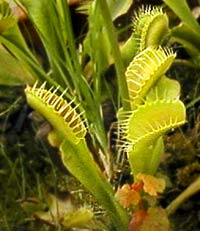 Local groups whose members fancy some particular variety of plant or flower often have displays and sales at this garden on the weekends. So far this year, there have been groups catering to irises, lilies, roses, cactuses, bonsai, and African violets. This week it was the turn of the group that grows carnivorous plants. I go to all of the shows just to look. I’ve noticed that at most of them, the members of the plants societies and the people browsing the displays are plus or minus ten years of my age (65) and are mostly women. Not so with today’s carnivorous plant show: the people buying and selling were mostly males in their 20’s. Members were sporting nose rings, do rags, leather jackets, and kick-ass boots. This was not your suburban garden club. What’s the masculine attraction here? What is about these flesh eating plants that this decidedly different group of plant lovers finds enticing? Some overheard remarks at the show: a little girl to her mom: “I’m scared. This looks like Jurassic Park.” A young woman explaining to the clerk why she couldn’t buy anything: “I’m a vegetarian so I wouldn't have anything to feed them.” Local groups whose members fancy some particular variety of plant or flower often have displays and sales at this garden on the weekends. So far this year, there have been groups catering to irises, lilies, roses, cactuses, bonsai, and African violets. This week it was the turn of the group that grows carnivorous plants. I go to all of the shows just to look. I’ve noticed that at most of them, the members of the plants societies and the people browsing the displays are plus or minus ten years of my age (65) and are mostly women. Not so with today’s carnivorous plant show: the people buying and selling were mostly males in their 20’s. Members were sporting nose rings, do rags, leather jackets, and kick-ass boots. This was not your suburban garden club. What’s the masculine attraction here? What is about these flesh eating plants that this decidedly different group of plant lovers finds enticing? Some overheard remarks at the show: a little girl to her mom: “I’m scared. This looks like Jurassic Park.” A young woman explaining to the clerk why she couldn’t buy anything: “I’m a vegetarian so I wouldn't have anything to feed them.” |
||||||||||||||||||||||||||||||||||||||||||

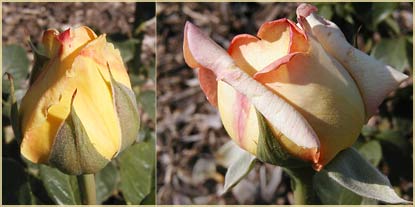
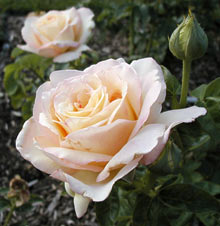 The rose was named at a “name giving ceremony” organized by an affiliate of the American Rose Society in the spring of 1945. They named the rose ‘Peace’ “for the world’s greatest desire” on the same day that a truce was declared in Europe. Then on the day that Japan surrendered, the Society selected ‘Peace’ as its All-American Rose award winner. The Society also had a vase with a single Peace Rose placed in the hotel rooms of the delegates attending the organizational meeting of the United Nations in San Francisco. With the vase was a note that read, “This is the rose ‘Peace’ . . . May it help all men of goodwill to strive for Peace on Earth.”