 |
|||||||||||||||||||||||||||||||||||||||||||
|
“Pauses there are, of course, . . .
in the declining of this pomp; . . . We must watch it until the end”
|
|||||||||||||||||||||||||||||||||||||||||||

|
 clear skies with mist near the ground: calm: 58ºF clear skies with mist near the ground: calm: 58ºFWhether summer plants and flowers are ready of not, this botanical garden begins its fall season the week after Labor Day. All of the exotic ornamental peppers, lush cannas and bananas that a week ago were overrunning the bounds of the display gardens are gone. As expected, mums packed with tight buds now fill the space. 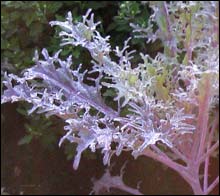 Mums are a given. Visitors expect to see them and this botanical garden obliges with massed groupings of plants the size of bushel baskets. But there’s always more. Other plants and flowers that can stand up to all but killing frosts always are here too. This year, the garden keepers chose a feathery-leafed kale named ‘Red Peacock’ with silvery and fuchsia hues. For contrast the garden planners picked a deep-purple Heuchera named ‘Obsidian.’ Mums are a given. Visitors expect to see them and this botanical garden obliges with massed groupings of plants the size of bushel baskets. But there’s always more. Other plants and flowers that can stand up to all but killing frosts always are here too. This year, the garden keepers chose a feathery-leafed kale named ‘Red Peacock’ with silvery and fuchsia hues. For contrast the garden planners picked a deep-purple Heuchera named ‘Obsidian.’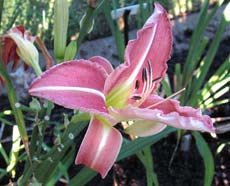 Here’s the last daylily of the season. It’s named ‘After Awhile Crocodile.’ Winner of the national daylily society’s award for best of the late-bloomers, it’s filled with enough buds to keep it flowering at least though the middle of the month. During daylily primetime in June and July, I don’t think I would have even noticed ‘After Awhile Crocodile.’ Now apart from a few ‘Altissima’ varieties whose blooms I have to look up to see, ‘Crocodile’ is all that’s left in this garden of hundreds of different cultivars. Here’s the last daylily of the season. It’s named ‘After Awhile Crocodile.’ Winner of the national daylily society’s award for best of the late-bloomers, it’s filled with enough buds to keep it flowering at least though the middle of the month. During daylily primetime in June and July, I don’t think I would have even noticed ‘After Awhile Crocodile.’ Now apart from a few ‘Altissima’ varieties whose blooms I have to look up to see, ‘Crocodile’ is all that’s left in this garden of hundreds of different cultivars.Both of the big August daylily sale weekends at the botanical are over. I jostled with crowds at both, but didn’t buy this year. With optimism I used to buy a couple of new varieties each year, but each time voles and shade got the best of them. Still, I picked up the sales lists just to see which daylilies were bringing premium prices. At the plant sale sponsored by the botanical garden the top price was $45 for a couple of fans of either ‘Harem House’ or ‘John Peat.’ ‘Prince of Thieves’ and ‘When Vampires Roar’ were selling for $40 apiece. At the plant sale of the Greater St. Louis Daylily Society where about 550 different varieties were offered, the top price was $30 for either ‘Church and Wellesley’ (no picture on the web) or ‘Love Over Gold.’ Now that the daylily season has ended, it’s time to pick my top 10 for 2008. Each year from the cacophony of colors in the daylily garden, I pick 10 of my favorites. There may be some pattern that guides my picks, but if there is I don’t know it. Each Saturday in June, July, and August I visit the daylily gardens and just point and shoot at the blooms that stand out from the rest without considering any of the technical traits that excite daylily buffs. Here then are my top ten picks for 2008 shown in the order in which I saw them blooming. This is the second morning this summer I’ve stopped midway through the Herb Garden to look at a small tree labeled “Medlar” (Mespilus germanica). What’s a medlar and what are those crabapple-sized fruits that look like over-sized rose hips or miniature pomegranates? 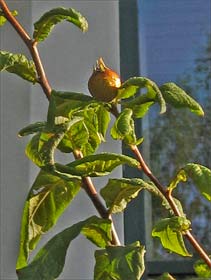 The most lyrical description of what medlars are and what can be done with them after they’re picked is on a blog called “Glass Petals Smoke: Gleaning from the World of the Senses” written by Michelle Krell Kydd. She explains that medlars are not your ordinary fruit. Few have heard about or seen the fruit. Fewer still are those who have tasted it. The aroma that comes from medlars’ ripening process is said to cause doubts about whether they should even be tasted. Medlars are picked after a hard freeze and then stored until they verge on rotten. It’s then that connoisseurs describe their flavor as “lingering, slightly sweet, slightly winey” and a “worthy mate for the best of liquors.” Others say they taste like mud with sand in it. For all you ever wanted to know about medlars, have a look at this article by Memory Russell. The most lyrical description of what medlars are and what can be done with them after they’re picked is on a blog called “Glass Petals Smoke: Gleaning from the World of the Senses” written by Michelle Krell Kydd. She explains that medlars are not your ordinary fruit. Few have heard about or seen the fruit. Fewer still are those who have tasted it. The aroma that comes from medlars’ ripening process is said to cause doubts about whether they should even be tasted. Medlars are picked after a hard freeze and then stored until they verge on rotten. It’s then that connoisseurs describe their flavor as “lingering, slightly sweet, slightly winey” and a “worthy mate for the best of liquors.” Others say they taste like mud with sand in it. For all you ever wanted to know about medlars, have a look at this article by Memory Russell.
|
||||||||||||||||||||||||||||||||||||||||||